Table of contents
Overnight, a place can go from “never heard of it” to fully booked, and the travel industry has learned to watch the margins, not the mainstream. In 2024 and 2025, rising airfares, pressure on iconic cities, and a post-pandemic appetite for novelty have pushed travellers to scan maps differently, chasing authenticity, space, and value. These under-the-radar destinations are not random winners, they are often the next hotspots because the same forces, economics, social media, and infrastructure, keep repeating, just in new geographies.
When prices rise, curiosity follows
Sticker shock changes behaviour faster than any trend report. With aviation costs remaining elevated compared with the pre-2020 baseline, and city breaks in established capitals increasingly priced like premium products, travellers are re-running the mental calculation of what “worth it” looks like. Industry data has consistently shown that demand is price-sensitive, especially for leisure travel, and when the cost of a familiar week in a famous place climbs, the alternative that used to feel risky starts to feel rational. It is not only flights; accommodation in headline destinations has been squeezed by limited supply, stronger demand, and in many markets the conversion of long-term rentals into short-term stock, and that pressure has been especially visible in Europe’s most visited cities.
This is where hidden destinations gain an opening: they can offer similar “holiday ingredients” for less, whether that is coastline and culture, mountains and wellness, or food and nightlife, and the difference in perceived value becomes shareable. A couple comparing a crowded, expensive Adriatic week with an itinerary that mixes beaches, lakes, and UNESCO-listed old towns at a lower total cost often needs just one nudge, a friend’s recommendation, a new flight route, a well-shot reel, and the decision flips. Crucially, the new hotspot effect is usually triggered before prices equalise; early adopters are motivated by getting there “before it changes,” and that sense of beating the crowd becomes part of the product.
There is also a second-order effect that accelerates the shift: once travellers start substituting away from the most expensive markets, capacity follows. Tour operators look for fresh inventory, airlines test seasonal routes, and accommodation investors, especially small-scale boutique players, hunt for towns where renovation and staffing costs are manageable. The result is a reinforcing loop, and it is why “hidden” rarely stays hidden for long once a destination’s value proposition becomes legible to outsiders.
One viral clip can reroute crowds
A decade ago, destination discovery was guided by brochures, guidebooks, and the slow churn of word of mouth. Today, the distribution system is social, and it is brutally efficient. A single creator’s post can surface a bay, a mountain road, or a food market to millions in hours, and the audience is primed to save, share, and replicate. Platforms reward novelty, and travellers reward specificity; the more precise the location, the more it feels like a secret worth collecting. That dynamic helps explain why “secondary cities” and rural regions have become fashionable, not because people suddenly stopped liking capitals, but because the internet trains us to chase the next angle.
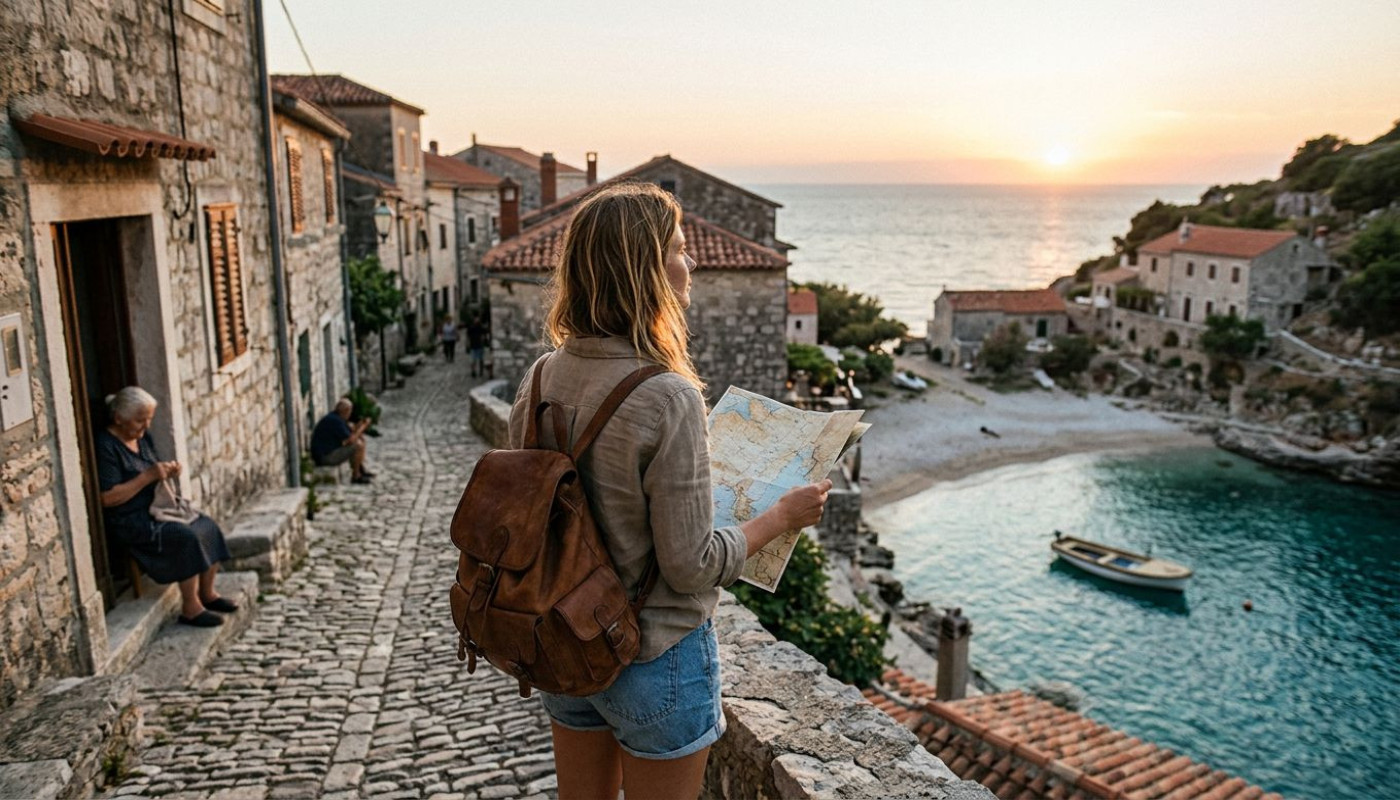
Hidden destinations tend to photograph well because they are not yet over-signposted, and the scenes still read as unfiltered, fishermen mending nets, stone alleys without souvenir clutter, cafés that look like they belong to locals, and that authenticity cue is powerful. The same visual logic pushes people toward shoulder-season travel, too; a misty hike, a quiet waterfront in October, or a winter city break framed as “cosy” signals sophistication and avoids the stigma of overtourism. In practical terms, it means that a place does not need massive marketing budgets to compete, it needs a few high-performing stories and the basic visitor infrastructure to cope with the response.
But the viral wave is not just about aesthetics, it is about friction. The most successful “tomorrow hotspots” have routes that are easy to stitch into an existing trip, and content that makes the itinerary feel simple: a two-hour drive from a hub, a scenic train line, a ferry that turns a transfer into an experience. When creators provide step-by-step guidance, where to stay, what to eat, how to get there, it reduces uncertainty, and uncertainty is what keeps many travellers in familiar circuits. Once the friction drops, the crowd arrives faster than local planning cycles can adapt, and that is where the best-hidden places can either manage the moment or be overwhelmed by it.
Access improves, then the story changes
Most destinations do not “blow up” by accident; they become reachable. The mechanics are often mundane: a new direct flight, a low-cost carrier adding seasonal capacity, better road surfaces, an upgraded border crossing, a modernised marina, and suddenly a journey that felt adventurous becomes easy enough for a long weekend. Even small changes matter, because travel decisions are made under time constraints; if a place can be done in four days instead of seven, it jumps into a much wider competitive set. The same applies to remote work patterns, as longer stays make secondary regions viable for people who can travel outside school-holiday peaks.
That shift in access also changes the editorial narrative around a place. While a destination is hard to reach, stories focus on discovery, hardship, and the romance of distance. When access improves, coverage pivots to experiences, food, design hotels, and “new openings,” and that is the moment the broader market takes notice. Media plays a role here, but so do booking platforms, which surface places through recommendation algorithms once supply is listed and reviews accumulate. Visibility becomes structural, not occasional; travellers start seeing the destination without actively searching for it, and that is when it begins to resemble a mainstream option.
In Europe, the pattern is especially clear in coastal and mountain regions that sit between established stars, because travellers can stack multiple countries or regions into one trip. The Balkans, for example, have benefited from this rebalancing, offering dramatic landscapes and historic towns while many Western European hotspots wrestle with crowding and higher costs. For travellers comparing routes, a coastline with clear water and shorter queues is not a compromise, it is a smarter version of the holiday they already wanted. And once the first wave confirms it through reviews and repeat visits, the destination’s “hidden” label becomes less a fact than a marketing hook.
Local choices decide what survives success
Here is the uncomfortable truth: becoming a hotspot is not automatically a win. The places that thrive are not those that attract attention, but those that shape it. When visitor numbers grow faster than local services, the problems arrive quickly, waste management, water pressure, seasonal labour shortages, and rising rents, and these issues can erode the very charm that drew travellers in the first place. Communities that set clear rules early, on short-term rentals, cruise capacity, protected areas, and traffic management, tend to preserve quality of life, and they also protect the visitor experience, because nobody enjoys a “secret” that feels like an overcrowded theme park.
The strongest emerging destinations also diversify what people do once they arrive. If everyone queues for the same viewpoint and eats on the same waterfront, congestion becomes inevitable. But when a region can spread demand across villages, hiking routes, museums, wineries, and off-season events, it can grow without collapsing under its own popularity. That requires investment in interpretation, signage, public transport, and local guiding, and it rewards travellers who want substance over checklists. A well-managed destination turns attention into longer stays and higher spend per visitor, rather than simply higher headcounts.
For readers looking to spot tomorrow’s hotspots, the signals are visible if you know where to look: new boutique openings rather than mega-resorts, improved transport links, a rise in independent restaurant culture, and a narrative that shifts from “undiscovered” to “we went, and here’s how.” Regions along the Adriatic and in the mountains are increasingly part of that conversation, and travellers researching itineraries will often end up on specialist portals that map out routes, seasons, and practical details. For Montenegro, for instance, www.montenegro-spirit.com is one of the places travellers use to translate a general curiosity into a workable plan, and that step, turning inspiration into logistics, is often what separates a fleeting trend from a sustained hotspot.
Booking smart before the boom hits
Want the benefits of a “hidden” destination without the headaches? Timing is everything, and shoulder seasons are the simplest lever. Prices are typically lower, availability is wider, and the experience is closer to what made the place attractive in the first place. Booking accommodation with flexible cancellation, and building an itinerary that mixes one or two must-sees with lesser-known alternatives, also reduces the risk of being funnelled into the same crowded circuit as everyone else. In practical terms, travellers should watch flight schedules for new seasonal routes, and reserve early when a destination is clearly on an upward curve, because that is when the best-value rooms and the most reliable local guides disappear first.
Budgeting should be realistic rather than romantic: hidden does not always mean cheap, especially once a place is “discovered,” but it can still mean better value. Expect to pay more for peak summer weeks, and less when you travel in May, June, or September, and look for public or regional support schemes if you are combining travel with cultural events or longer stays, as some destinations offer incentives for off-season tourism and remote-work visitors. The smartest play is to plan now, compare transport options, and book the core elements early, because once the boom hits, the secret is no longer the scenery, it is getting a reservation at all.
On the same subject

How To Choose The Right Type Of Yacht For Your Sailing Adventure?

Exploring The Uniqueness Of Private Art Museum Tours

tranquil meditation retreats in the indian himalayas serene getaways for spiritual growth

Exploring The Benefits Of Seasonal Travel With Local Festival Experiences

Exploring The Hidden Gems: Unique Family-Friendly Attractions In NYC's Five Boroughs
