Table of contents
Lost luggage, missed connections and weather that flips in minutes, travel mishaps are no longer rare edge cases, they are a defining feature of the post-pandemic tourism boom, as crowded hubs, stretched staffing and more volatile climate patterns collide. Yet the most seasoned explorers often credit their best habits to the trips that went wrong, because a failure on the road quickly becomes a system at home. The question is not how to avoid every mistake, it is how to turn the inevitable ones into sharper judgment, calmer decisions and, ultimately, better journeys.
When plans collapse, your priorities surface
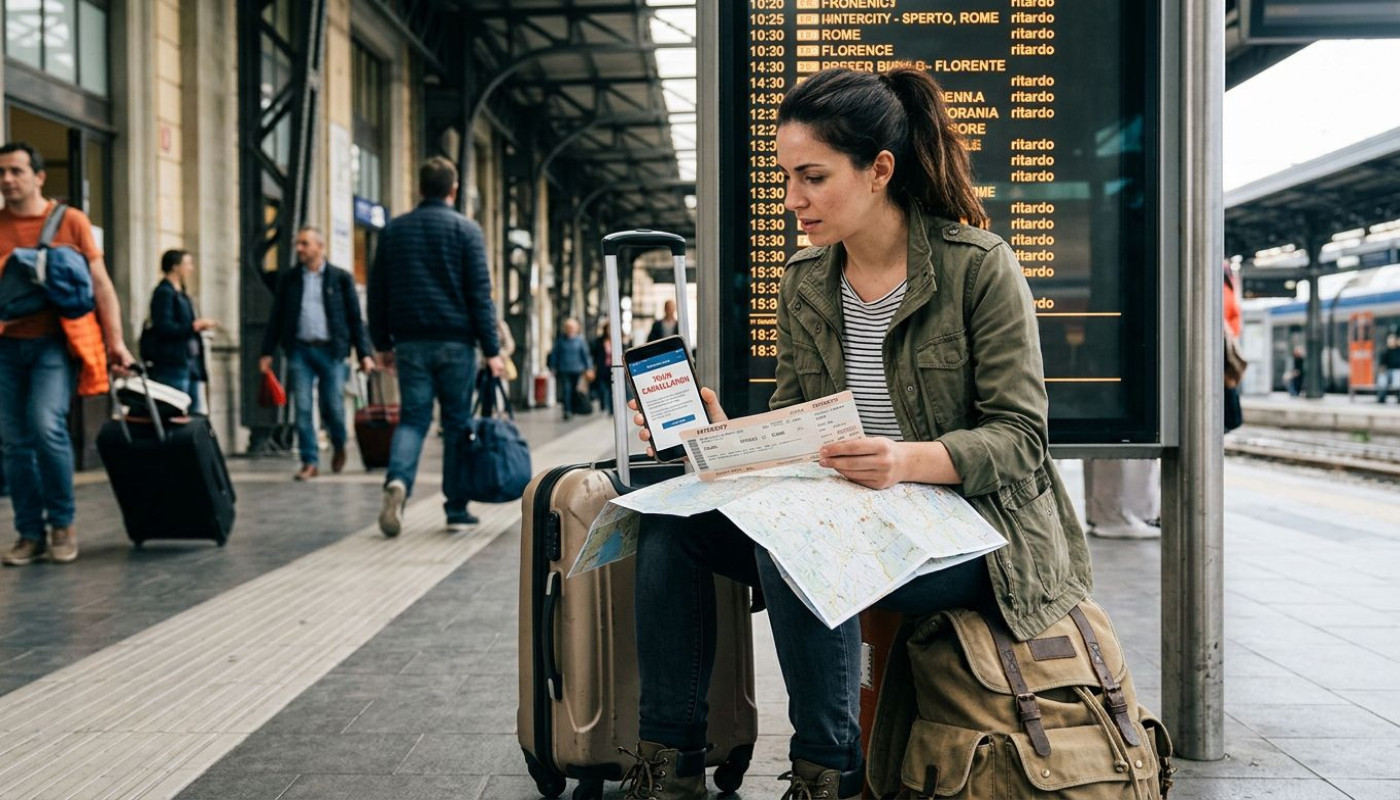
Bad luck has a way of clarifying what matters. When a flight is cancelled at 22:30 and the rebooking line snakes past the duty-free, the “perfect itinerary” stops being a vision board and becomes a negotiation with time, money and energy, and that moment forces a hierarchy: sleep before museums, water before Instagram, a working phone before another souvenir. This is not just anecdote; global aviation has been grappling with persistent disruption since demand rebounded, and while punctuality improved in parts of 2024 compared with the chaotic peaks of 2022 and 2023, delays remain a daily reality at major European and North American gateways, where air traffic constraints and weather regularly ripple across networks. Travelers who have lived through a domino-effect day learn to build slack on purpose, and that slack is not laziness, it is resilience engineered into the schedule.
One concrete habit comes from the people who have missed exactly one non-refundable tour: they stop stacking “must-do” items back-to-back, and they place their highest-stakes activity early in the trip rather than late. Another is the “two keys” rule: if something is truly important, you need two independent ways to access it, meaning a digital boarding pass and a printed copy, an eSIM and a physical card, a cloud backup and an offline folder. Travel fails also teach the value of decision triggers. Instead of debating endlessly in a stressful moment, smart travelers pre-decide thresholds, for example, “If the delay exceeds three hours, I switch to rail,” or “If I cannot retrieve my bag by midnight, I buy essentials and file the claim immediately.” The priorities you discover under pressure are the ones that deserve to guide your planning next time.
The best travelers plan for weather, not hope
Weather does not ruin trips by being “bad,” it ruins them by being surprising, and surprise is often a planning failure. Climate and mobility data increasingly underline the same point: extremes are becoming more disruptive, and shoulder seasons that once felt stable can now swing between unseasonal heat, heavy rain and strong winds. That matters everywhere, but it hits hardest in destinations where nature is the main attraction, because a closed road, a grounded boat or a sudden storm does not merely alter a day, it can erase the core experience you came for. If you have ever watched a long-awaited viewpoint vanish behind a wall of fog, you know the emotional cost of treating forecasts as background noise.
The smarter response is tactical, and it begins before you pack. Travelers who have been burned by one soaked hike tend to adopt a “modular” wardrobe: layers that can pivot quickly, and shoes that can handle wet ground without turning your feet into a blister experiment. The next step is itinerary design, where you pair outdoor anchors with indoor fallbacks that are genuinely appealing, not a desperate “maybe we’ll find a mall.” It also means learning local weather rhythms, because in some places, the forecast that matters is not the day’s high temperature, it is the wind speed on a particular road, the visibility at a specific hour, or the tide schedule for a beach walk. If your trip involves dramatic landscapes and fast-changing conditions, reliable local guidance is worth more than another generic travel blog, and resources such as https://www.iceland-spirit.com/ can help travelers understand what flexibility looks like on the ground, from seasonal access to sensible pacing when conditions shift.
Money mistakes hurt, then they teach discipline
Nothing sharpens a traveler’s mind like an unexpected bill. A forgotten roaming setting, a last-minute hotel surge, a “small” car-rental add-on that doubles the price, these moments sting, and precisely because they sting, they can turn into durable financial habits. In recent years, many popular destinations have also seen elevated accommodation prices during peak weeks, with dynamic pricing models responding instantly to demand spikes, and the result is that improvisation is often more expensive than it used to be. Meanwhile, consumer rules vary, and even when protections exist, they rarely compensate for the immediate stress of paying out-of-pocket in a foreign currency.
Travel fails build discipline in three practical ways. First, they push people to separate “trip money” into categories that mirror reality: transport, lodging, food, activities and a contingency buffer that is not symbolic. Second, they encourage a clear strategy on payment methods, including when to use a card with no foreign transaction fees, when cash is still useful, and how to avoid the deceptively costly option of dynamic currency conversion at terminals. Third, they make travelers more rigorous about insurance and coverage, not as a vague comfort blanket but as a checklist tied to the trip’s risk profile. A weekend city break does not need the same protection as a remote-road itinerary, and reading the exclusions is not paranoia, it is competence. The lesson is not to spend less at all costs, it is to spend on purpose, because the smartest budget is the one that matches the trip you are actually taking, not the one you wish you were taking.
Small mistakes create big safety habits
Safety rarely changes through fear, it changes through routines. The traveler who once left a phone on a café chair develops a system: a pocket rule, a lanyard, a five-second check before standing up. The hiker who once underestimated a “short” trail starts carrying water, layers and a battery pack as if it were normal, because it should be. These are not dramatic stories, yet they are the ones that quietly reduce risk. And in an era when overcrowding can turn a popular site into a bottleneck, and when navigation depends heavily on devices that can fail, micro-habits matter more than ever.
Better safety also comes from how you communicate. Seasoned travelers share live itineraries with someone they trust, not to invite control but to create a safety net, and they set simple check-in expectations, especially when driving long distances or exploring areas with limited signal. They also learn to interpret local advisories with humility, because the most dangerous sentence on a trip is “It looks fine to me.” That mindset extends to transport choices, fatigue management and alcohol, which is often the hidden factor behind poor decisions on the road. The paradox is that mishaps can make you braver in the best sense: not reckless, but confident enough to say no, to turn around, to rest, and to ask for help early. When you convert small errors into repeatable habits, you do not just travel safer, you travel calmer, and calm is the real luxury.
Before you go: book smart, spend smart
Build slack into transfers, and keep your highest-priority activity early. Set a realistic budget with a true contingency line, then choose insurance that fits the risks you face. If you are eyeing seasonal nature trips, reserve key transport and lodging ahead, and check whether local discounts or visitor passes apply; the savings often fund the buffer that saves the trip.
On the same subject
Do Destination Trends Shape Advice Or Is It The Other Way Around?
Mistakes That Secretly Perfect Your Travel Itineraries

Expanding Your Brand's Reach With A Niche Social Platform
Maximizing Your City Trip: Tips For An Extended Stay

How Ethical Tourism Supports Local Communities And Tribes?

A Guide To Understanding Mediterranean Marine Ecosystems

Exploring The Benefits Of Off-Season Camping: Wellness, Savings, And Unique Experiences

Indulge in a Global Taste Tour: Unmasking Native Gastronomy

Unearth Hidden Gems: Off-the-Beaten-Track Destinations

Embracing Tiny Home Living: Revolutionizing Holiday Accommodations

Transforming Your Love for Hiking into Eco-Tourism
